
29/04/2026 – 29/04/2026, 6:00 pm,
Perfomance by Ewa Dziarnowska (work in progress)
, Stadthausgalerie Münster (hosted by Kunsthalle Münster)hell is other people (if you're lucky): Chloe Chignell, Ewa Dziarnowska, Dorota Gaweda + Eglė Kulbokaitė, Liina Magnea, Abdoul Karim Martens + Dominik Sartor, Sinaida Michalskaja, Alexandra Sheherazade Salem, Gaia Vincensini
, Stadthausgalerie Münster (hosted by Kunsthalle Münster)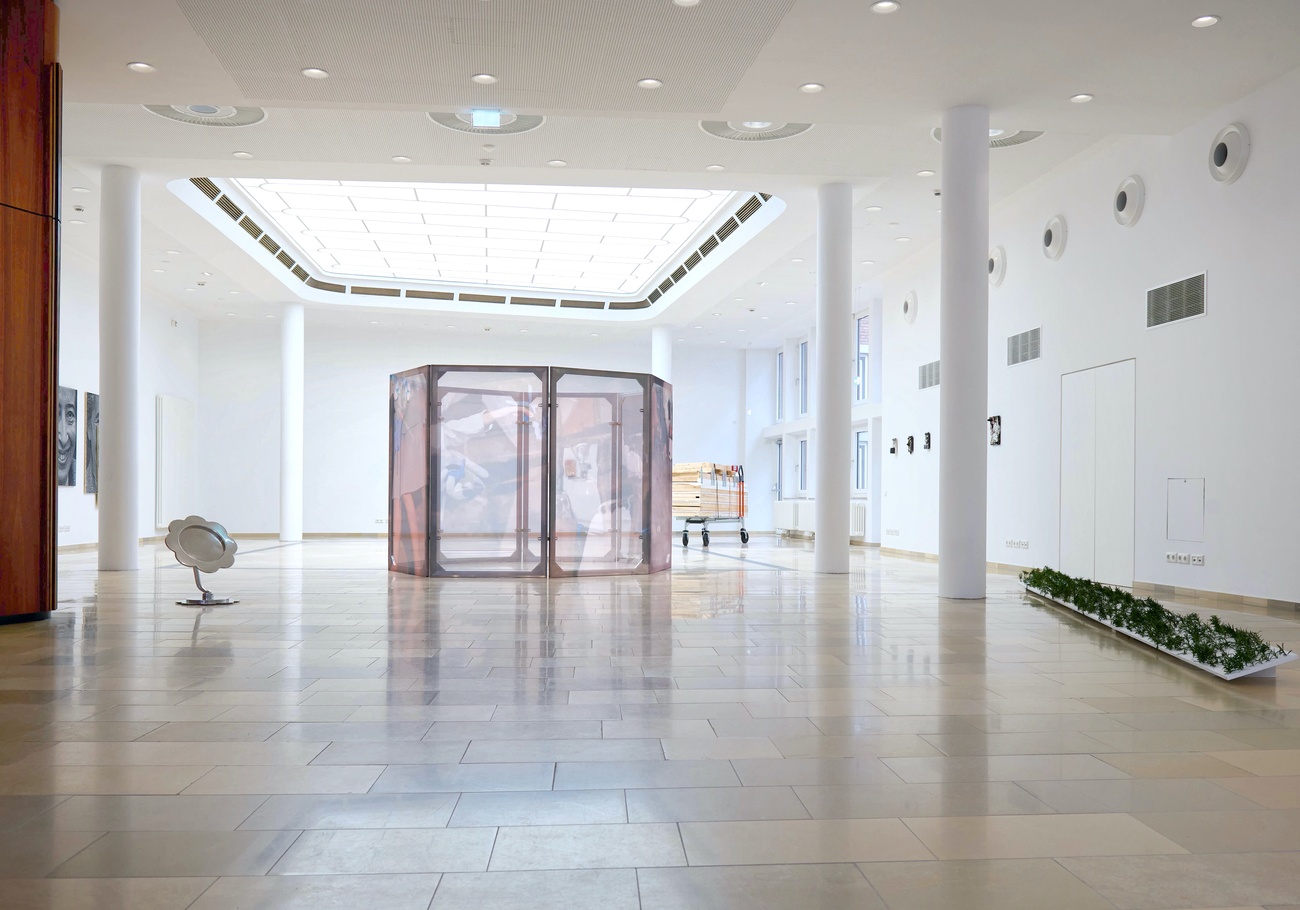
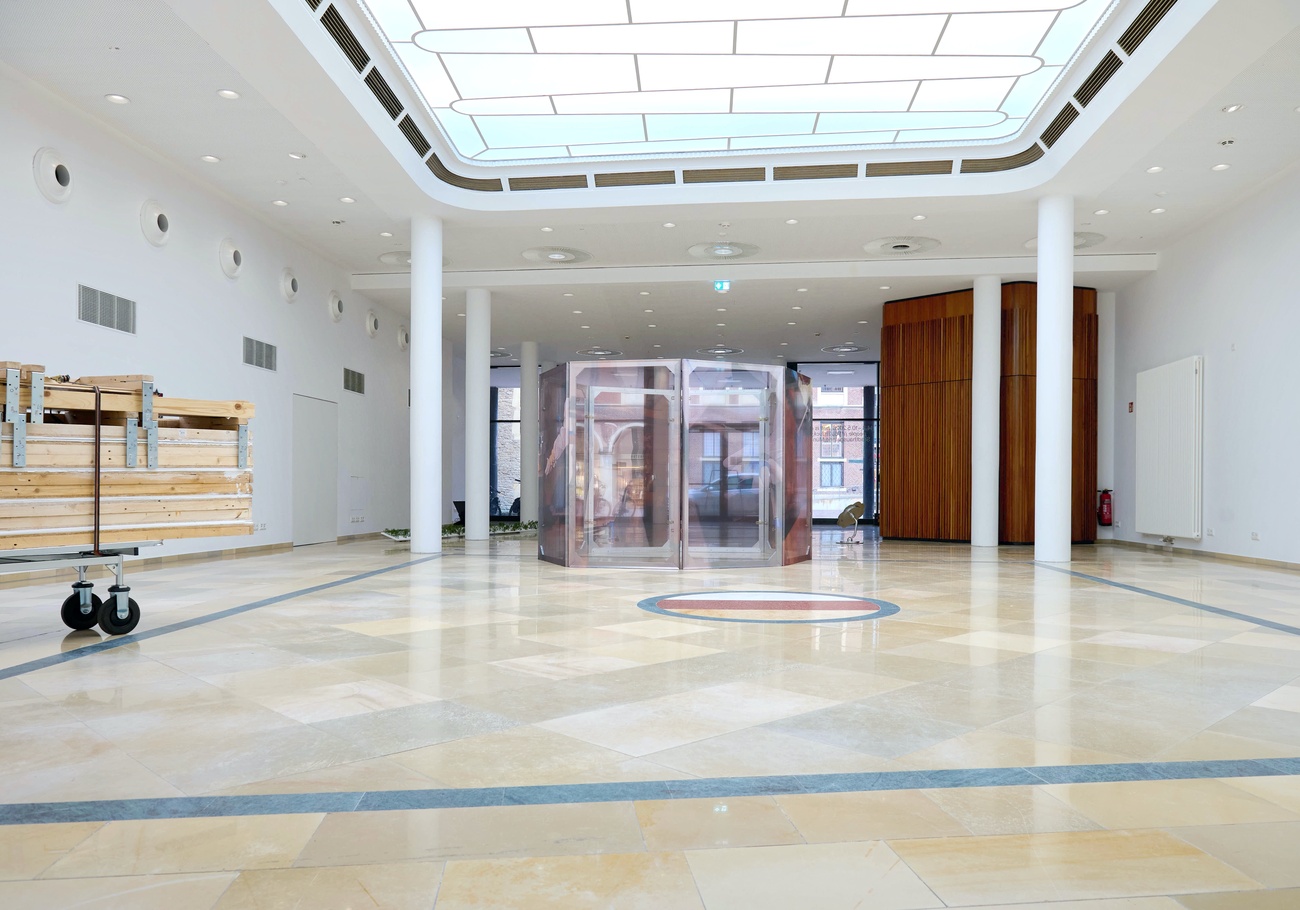
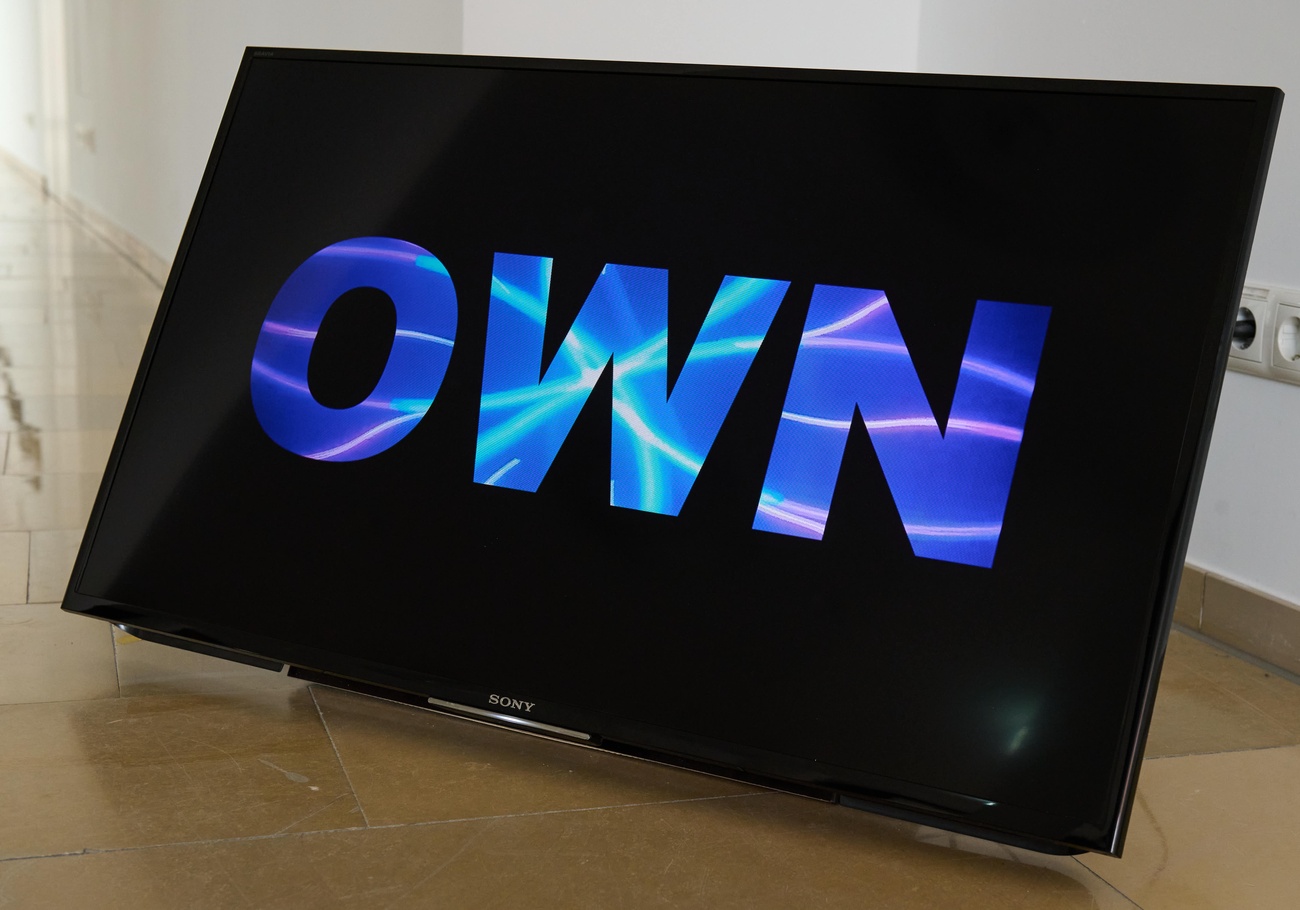
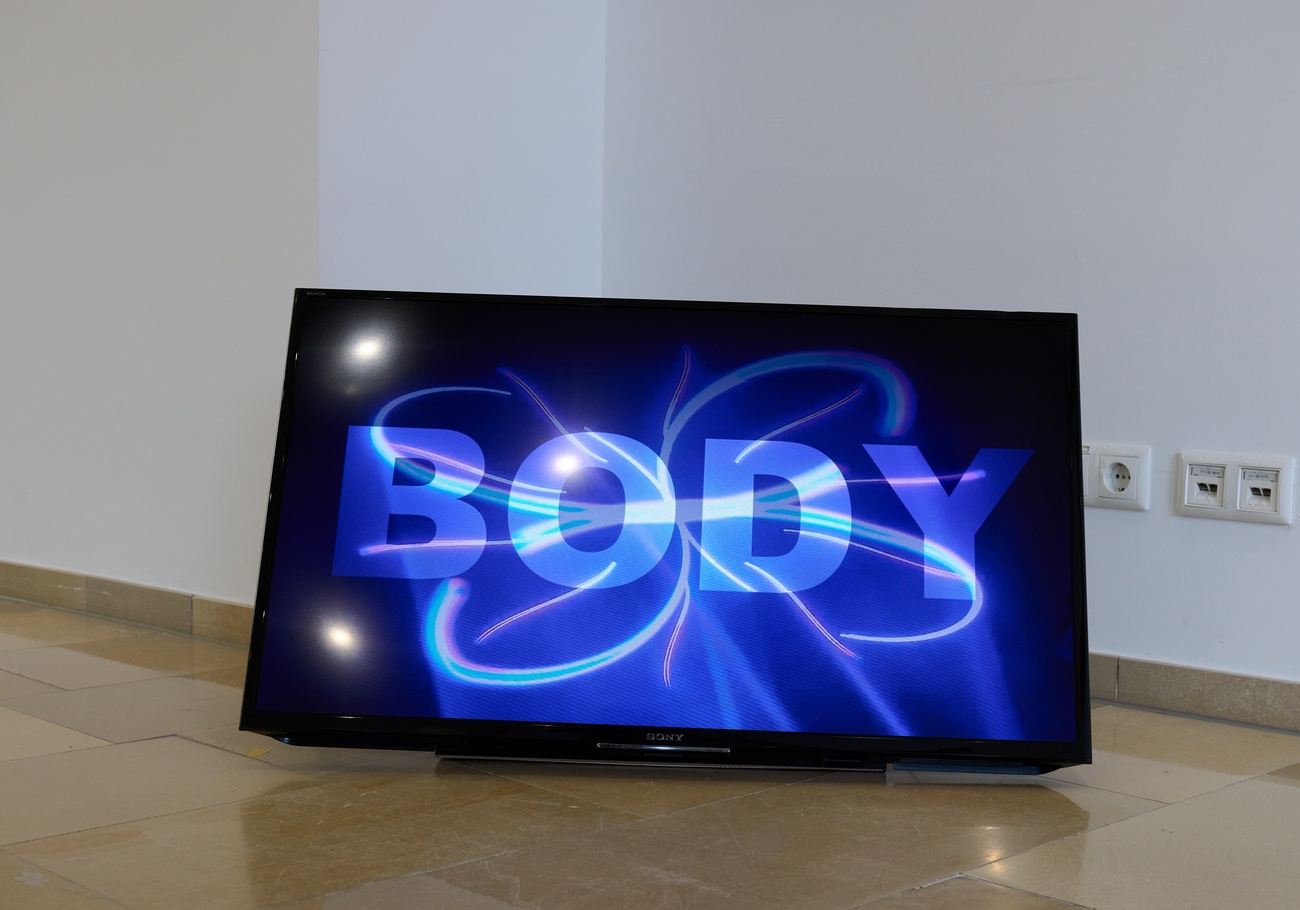
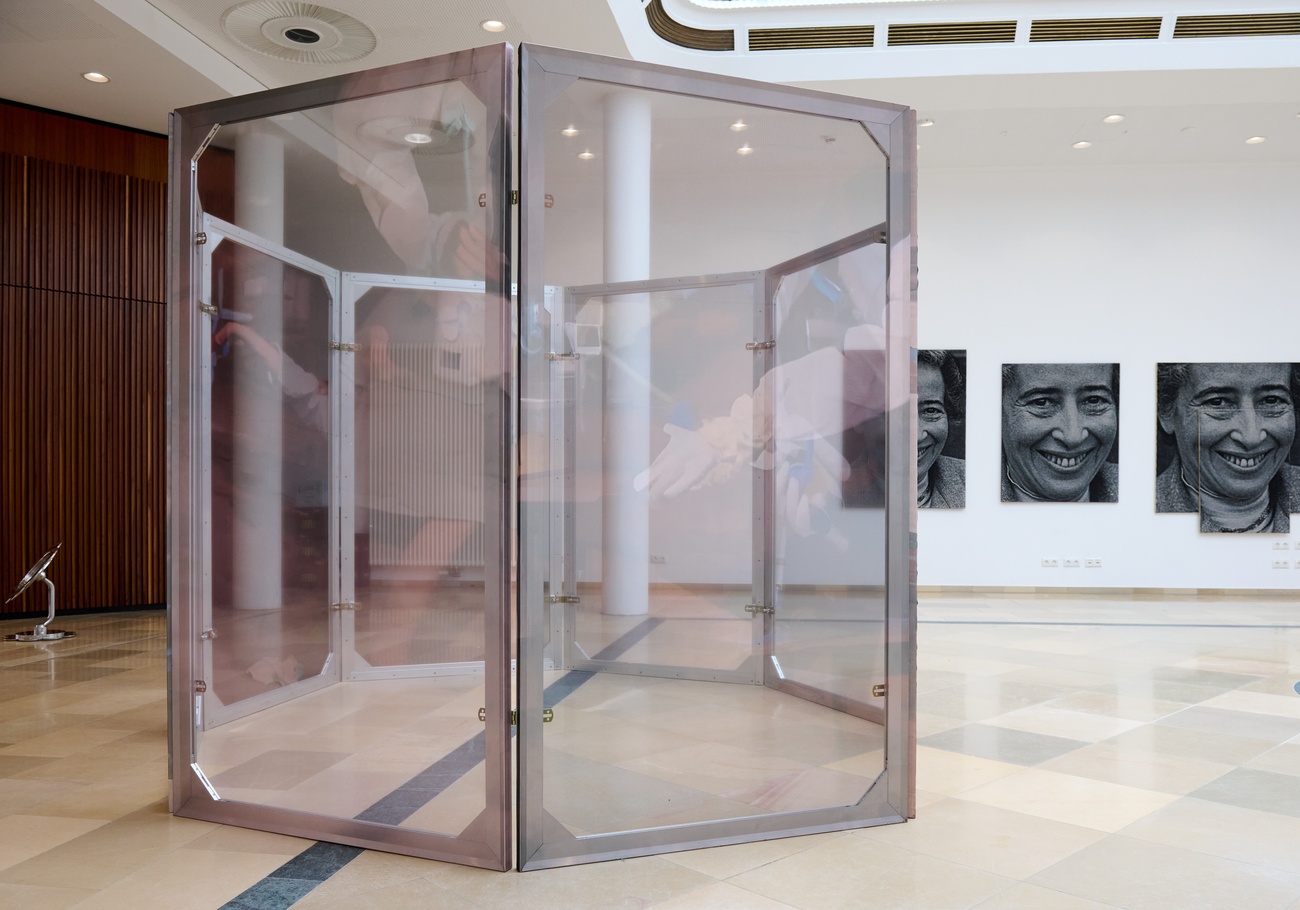
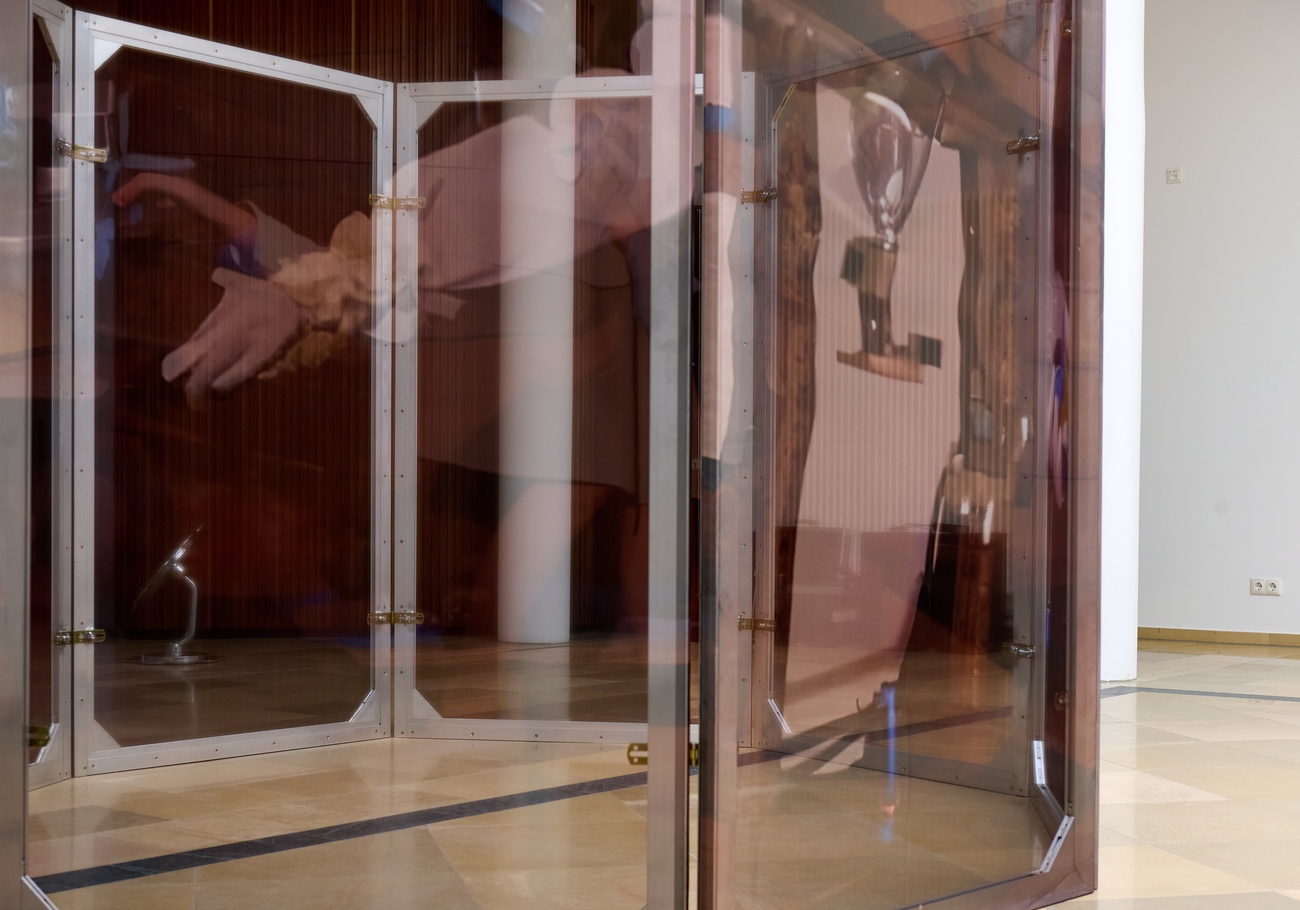
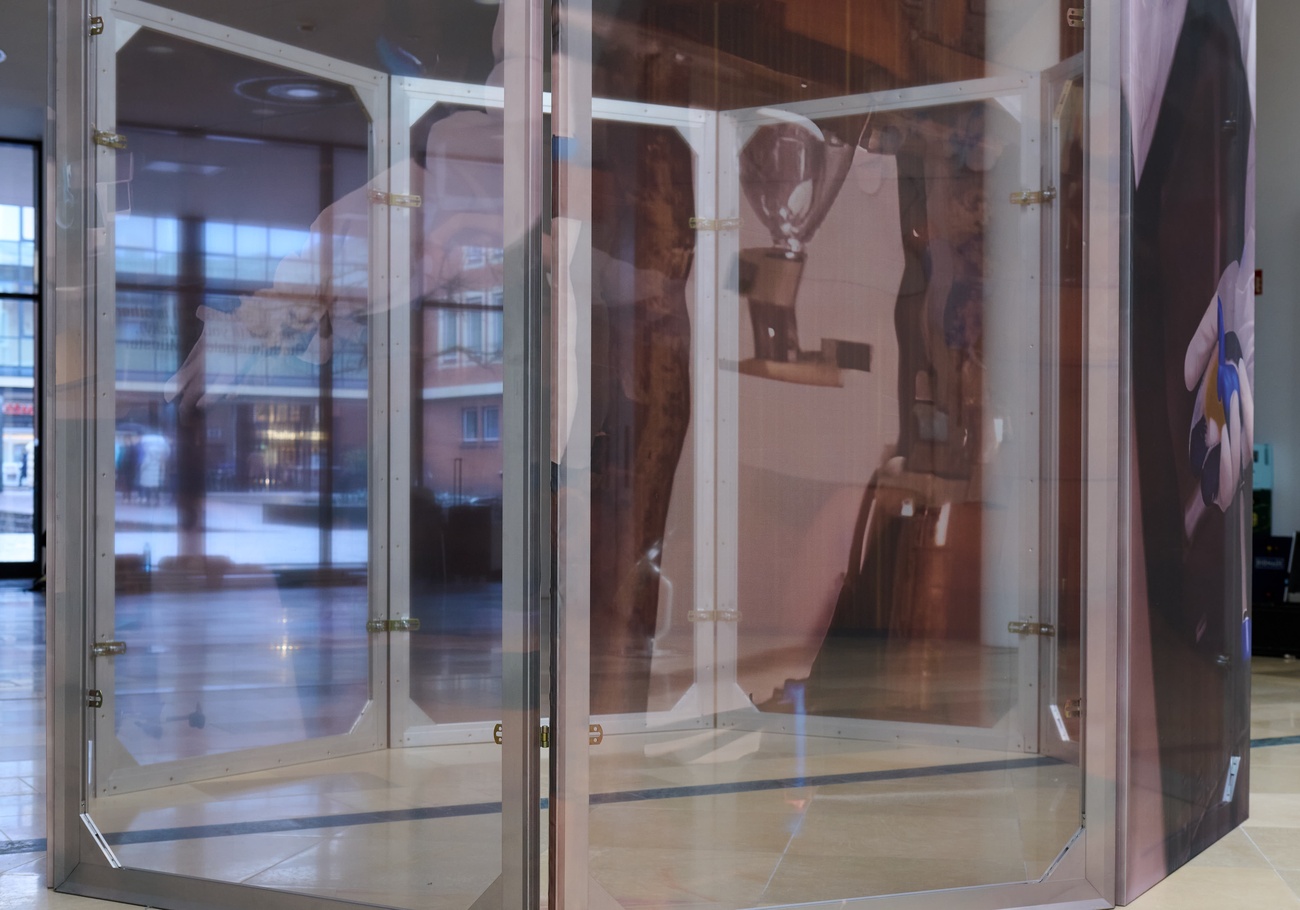
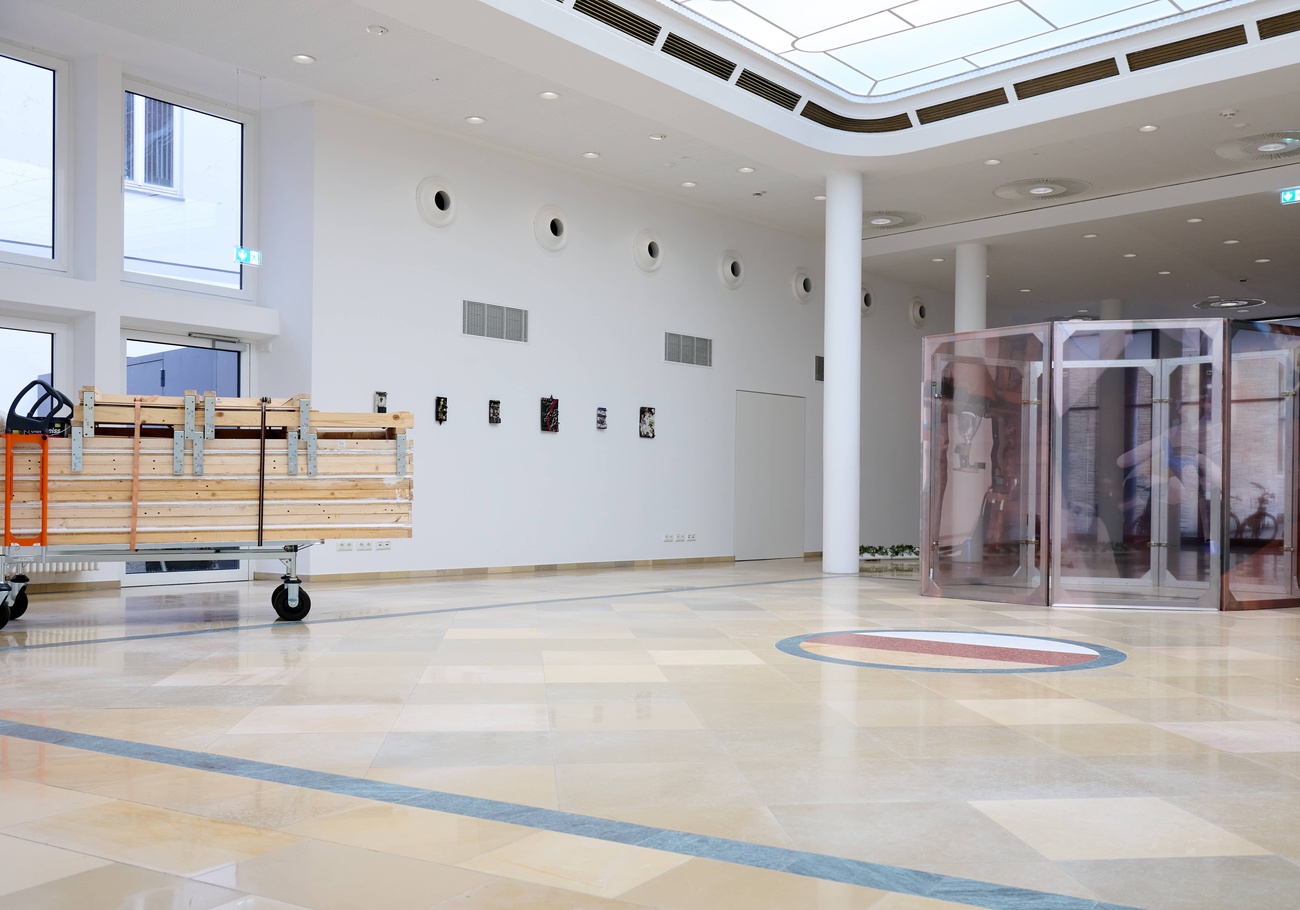
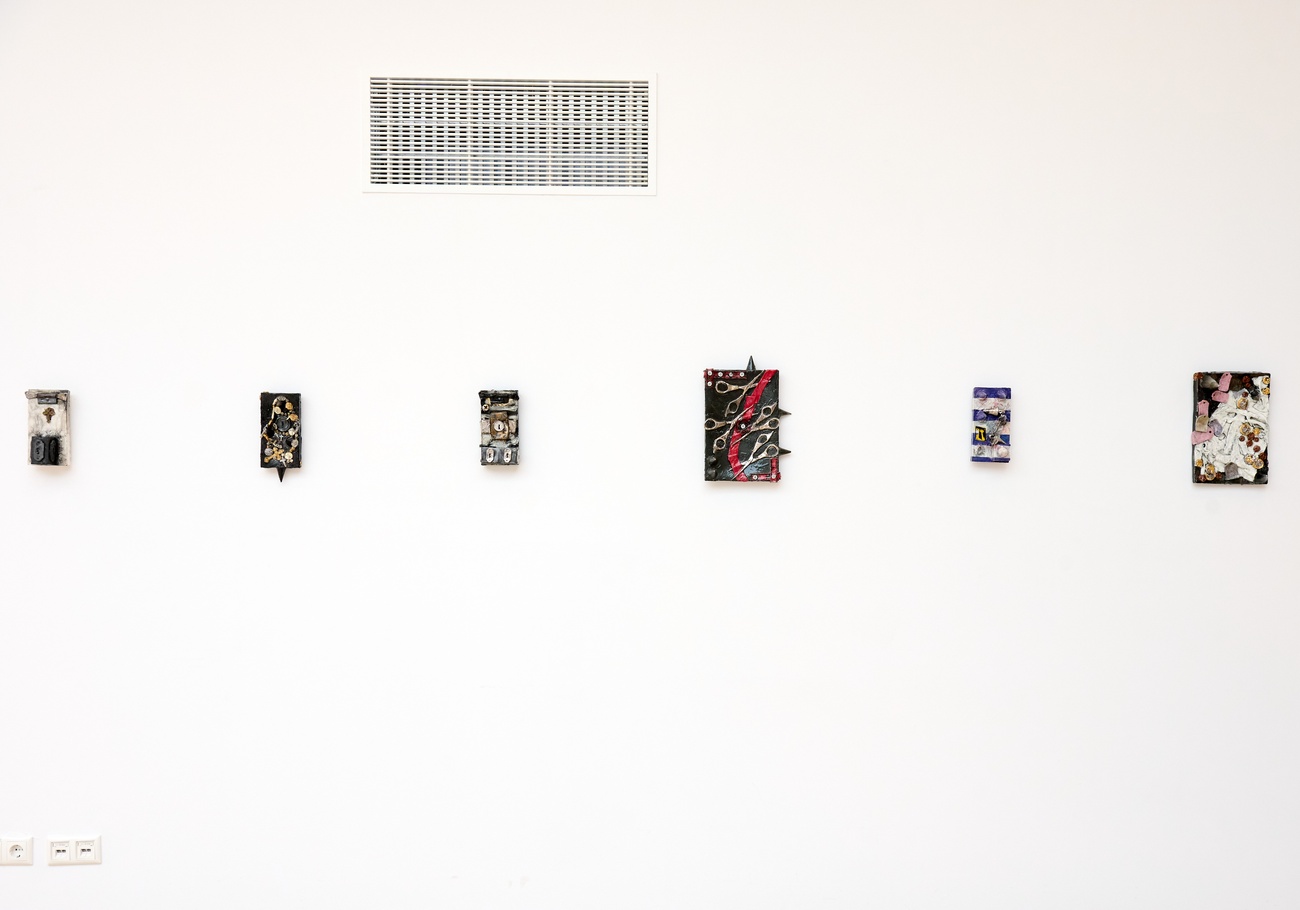
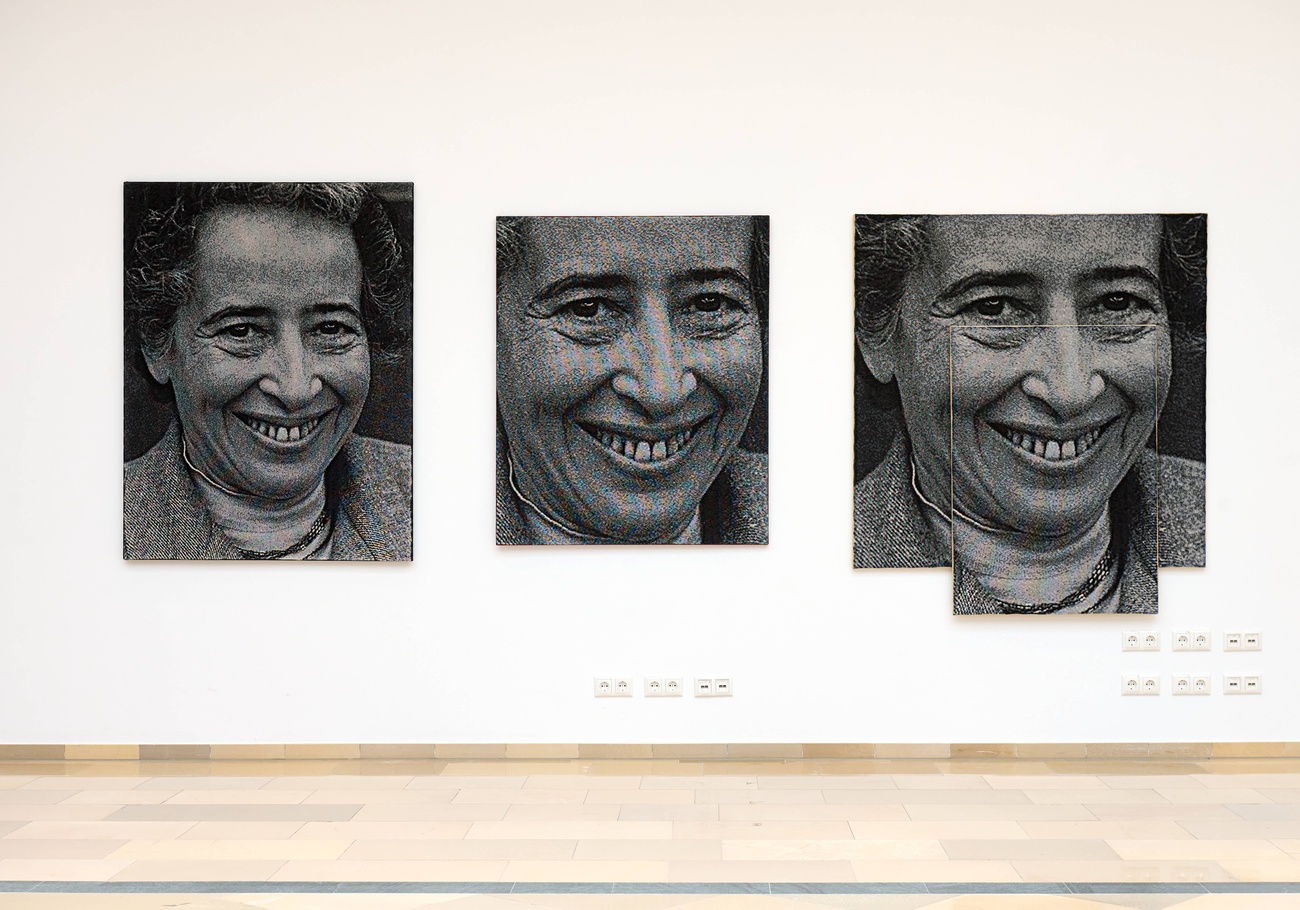
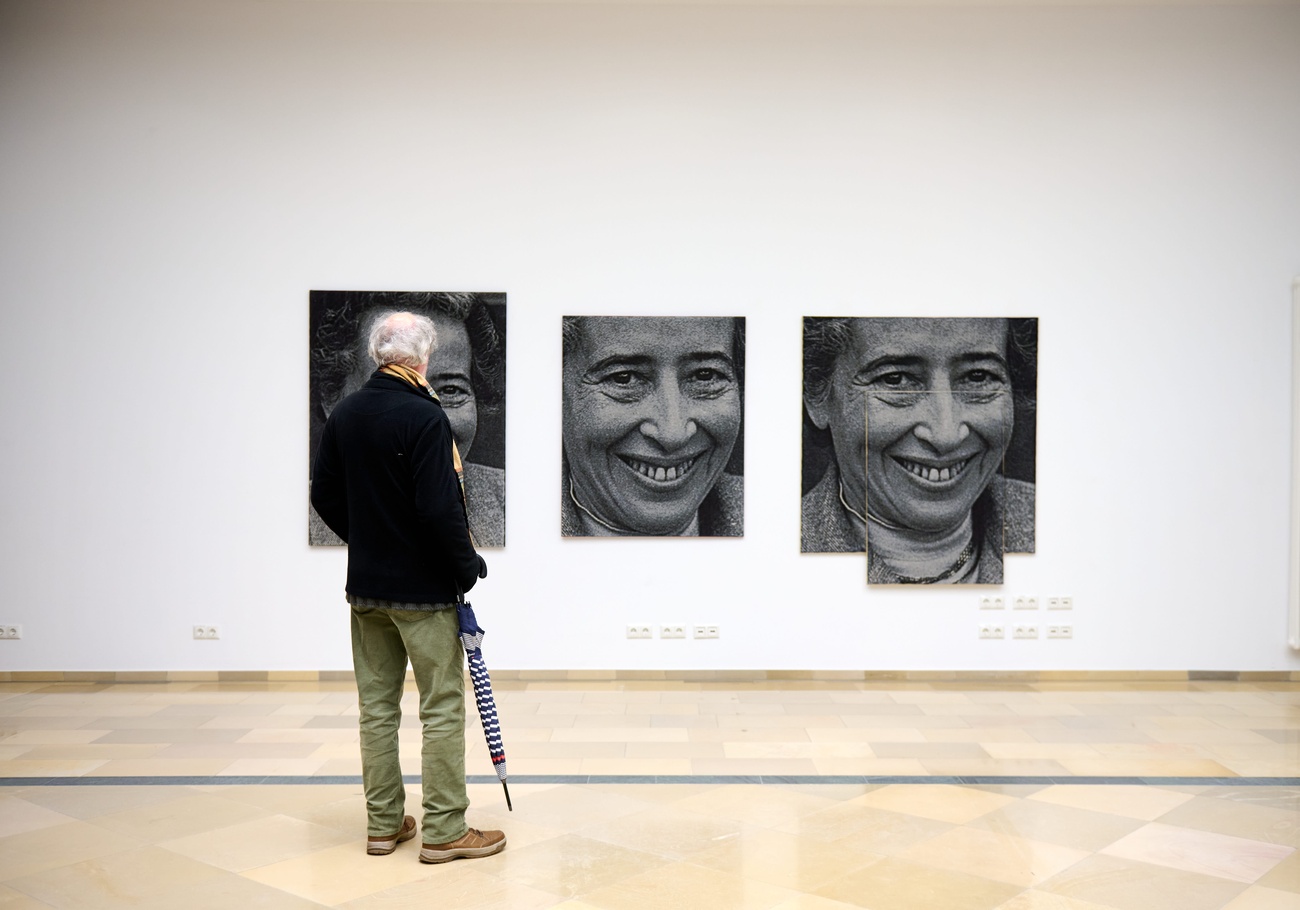
hell is other people (if you’re lucky), 2026, installation view Stadthausgalerie
Credithell is other people (if you’re lucky) is a group exhibition and performance series that explores how we process the world, while being confronted with the inconvenience of other people. On display are new commissioned installations and performances at the Stadthausgalerie Münster as well as an intervention in public space.
hell is other people (if you’re lucky) is curated by Anneliese Ostertag and Antoine Simeão Schalk.
Kunsthalle Münster and Residence NRW⁺ are pleased to present hell is other people (if you’re lucky), an exhibition that understands the public as an affective field, shaped by the ongoing work of being in relation. Borrowing its title from the cultural theorist Lauren Berlant (1957–2021) and her book The Inconvenience of Other People (2022), the exhibition points to the frictions that shape our everyday coexistence: (un)solicited glances and touches, misunderstandings, and irritations. In the public realm, we constantly have to negotiate the social fabric with its permissions and prohibitions, navigating the many rules, signals, and expectations that shape how we move and act. Rather than attempting to smooth over these frictions or ignore the inequalities they reveal, the exhibition invites us to stay with them and to consider what spaces for thought and action might emerge. What kinds of relations and collective imaginations might take shape under such conditions? And what kind of public space would be needed for them to unfold?
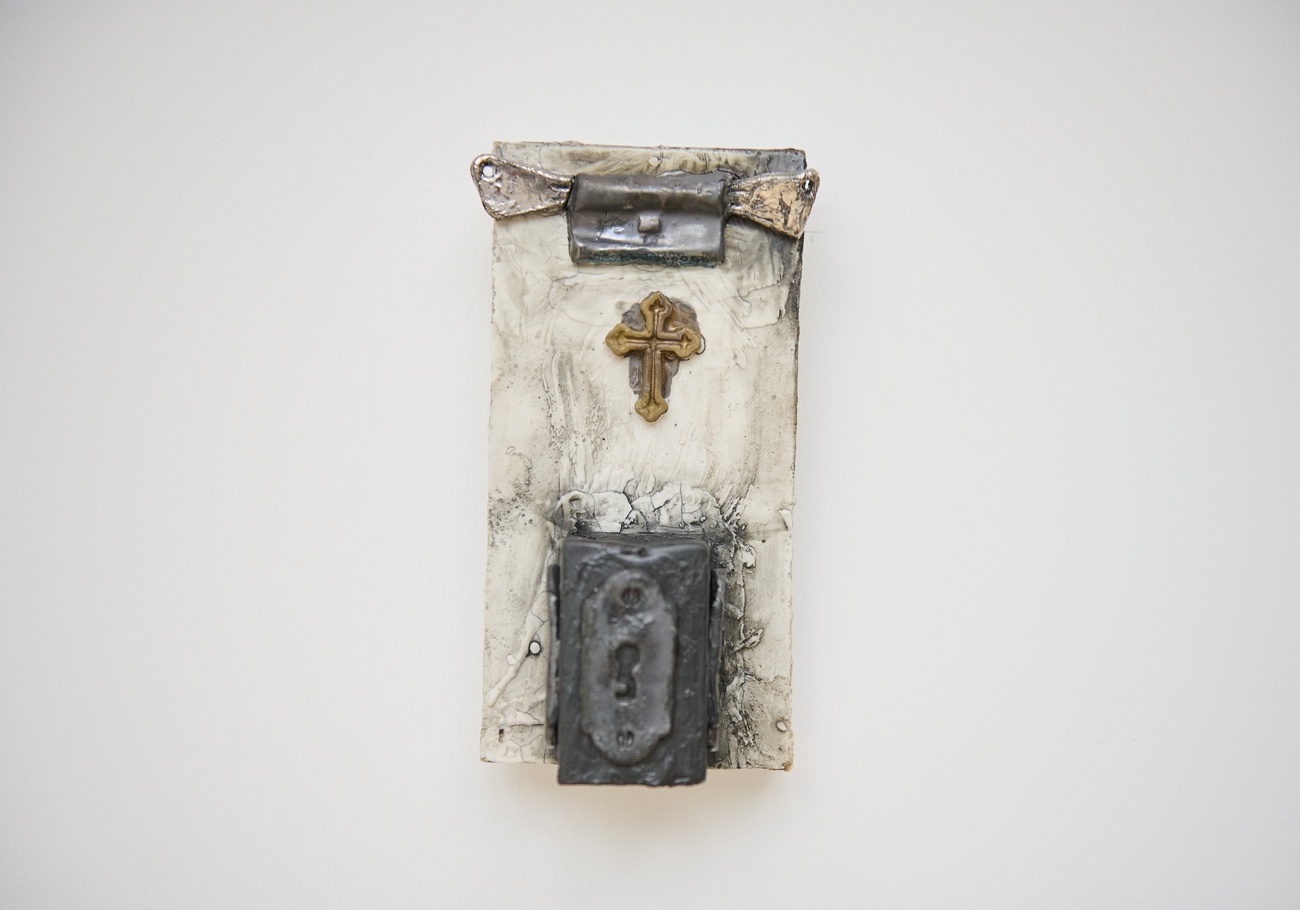
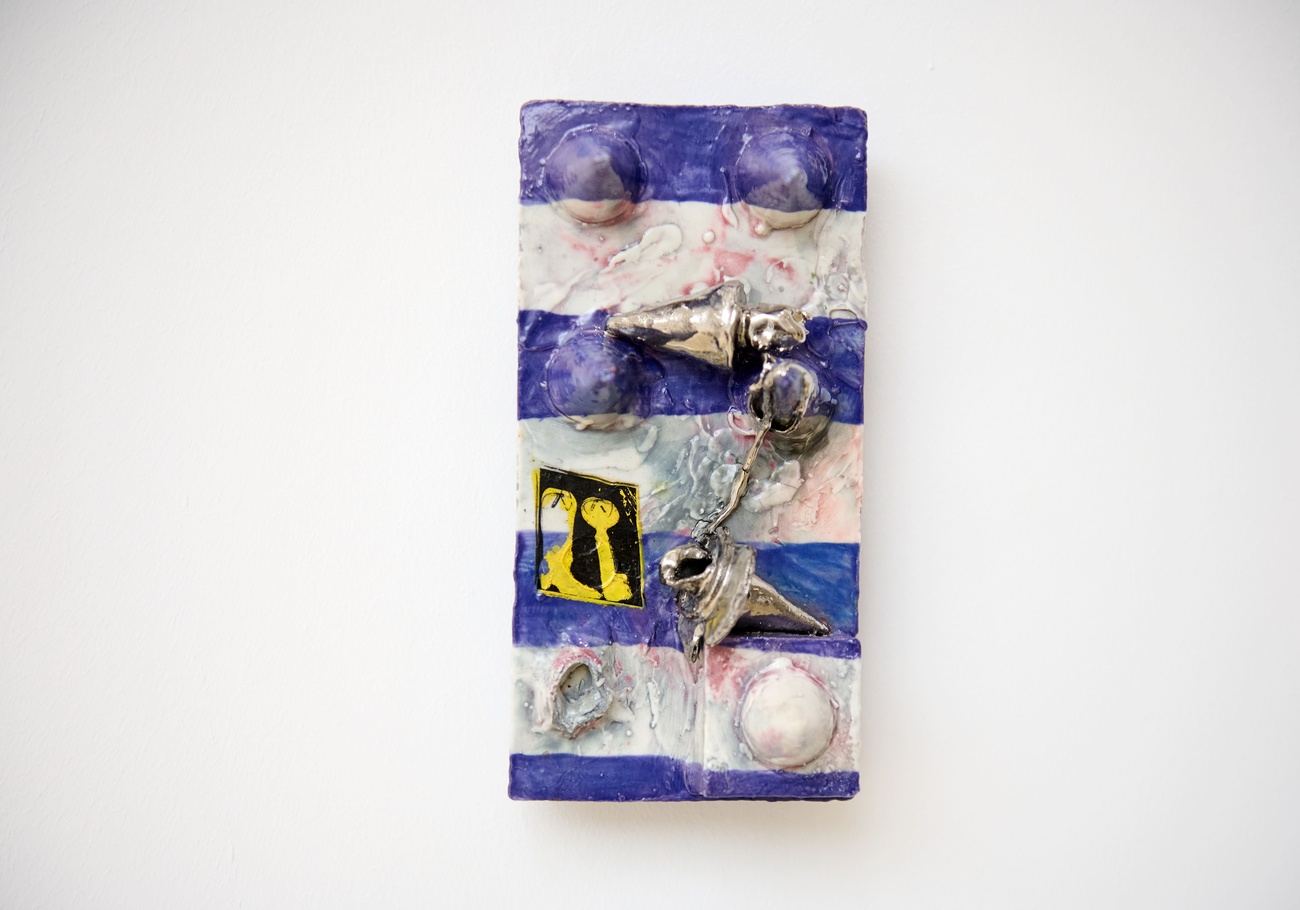
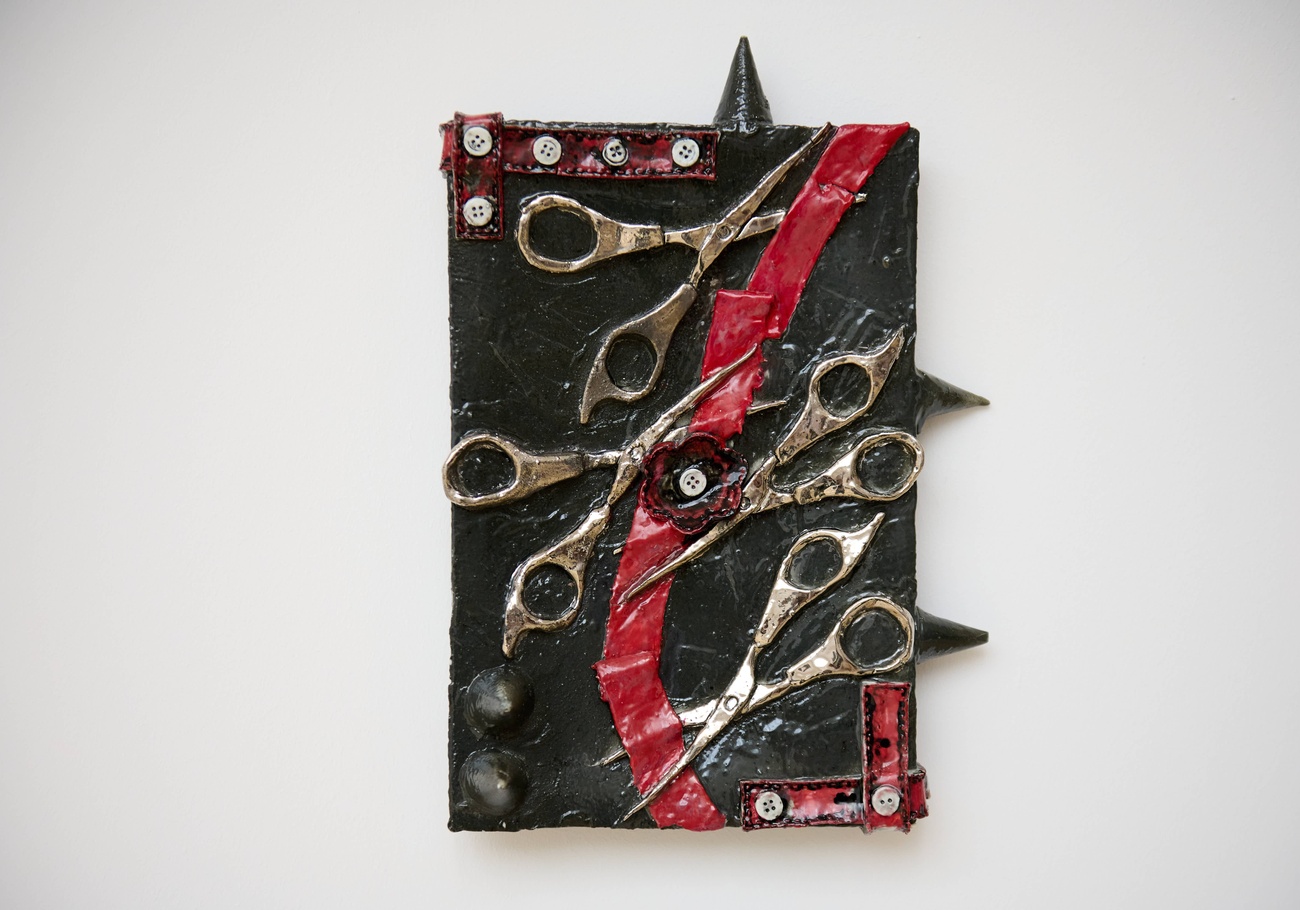
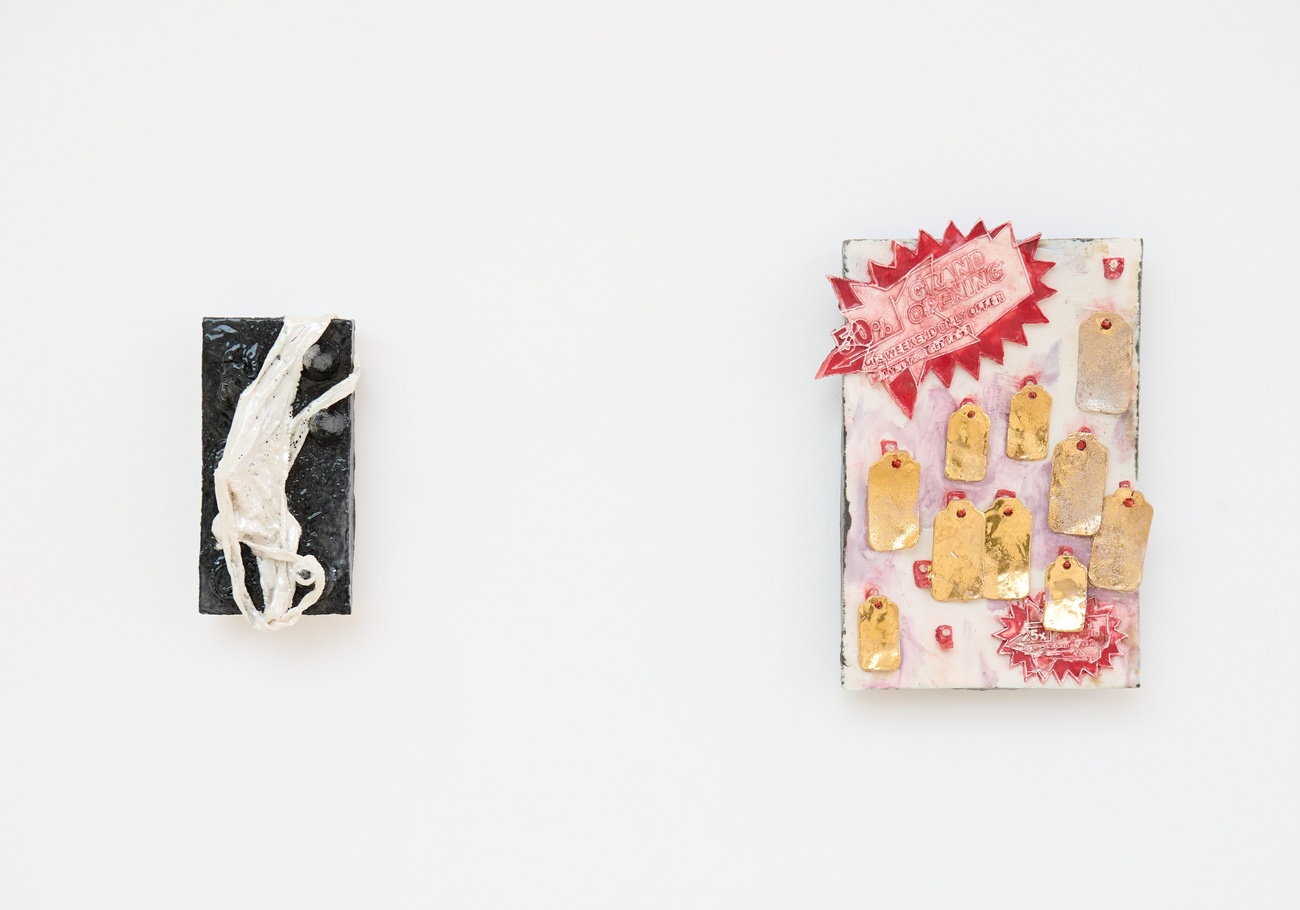
The Stadthausgalerie is situated in the inner courtyard of the historic town hall in Münster’s city centre. It functions simultaneously as an election office and an exhibition space – a hybrid site between democratic infrastructure and artistic presentation. The installed works reflect on the increasing privatization and commodification of public space. Behind the glass facade of the Stadthausgalerie, ceramic works by Gaia Vincensini look out onto the city with irony and precision. Motifs of locks, clocks, crosses and chains reference systems of belief, finance and protection. They evoke promises of stability upon which capitalist systems and privatized public spaces are built.
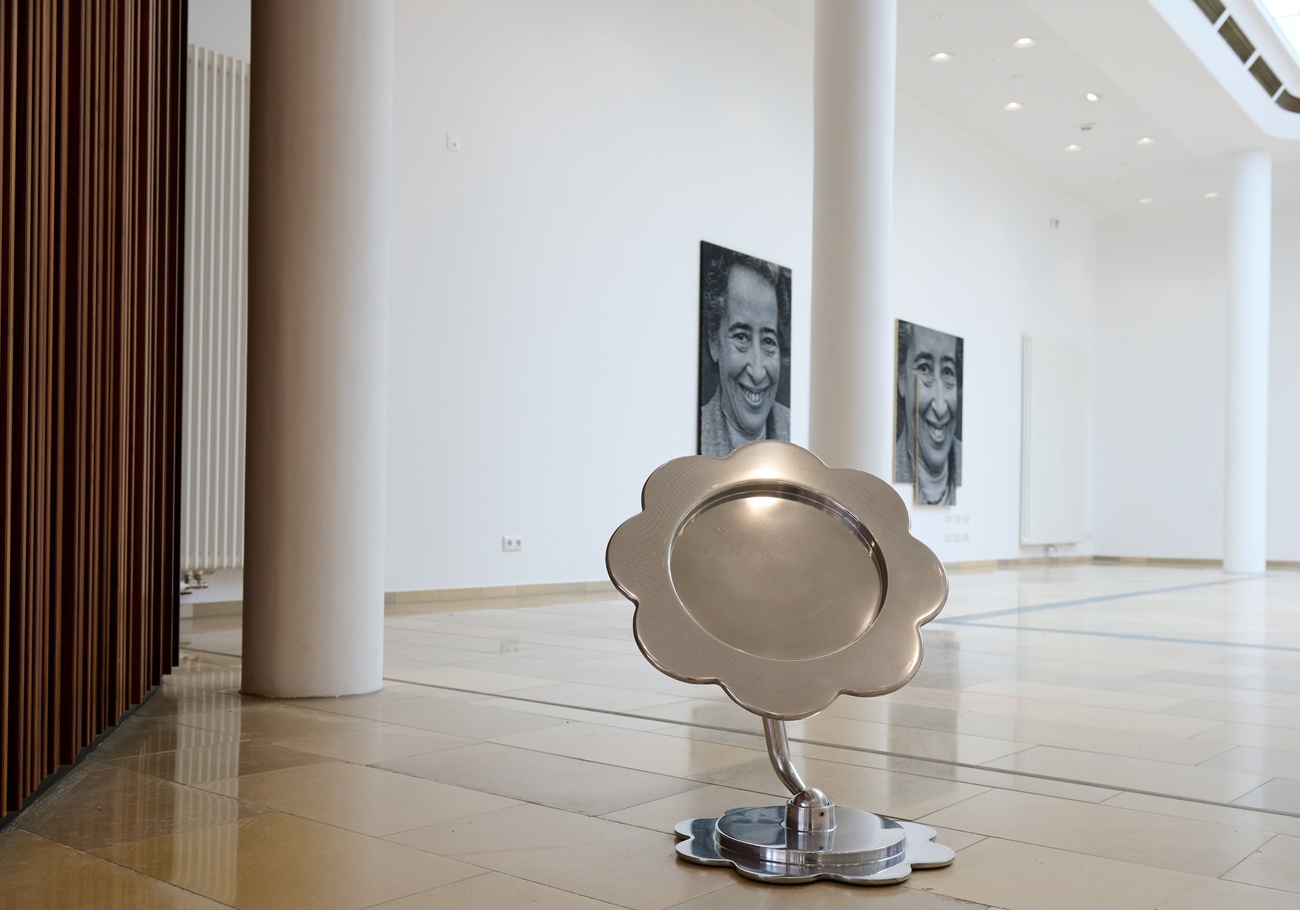
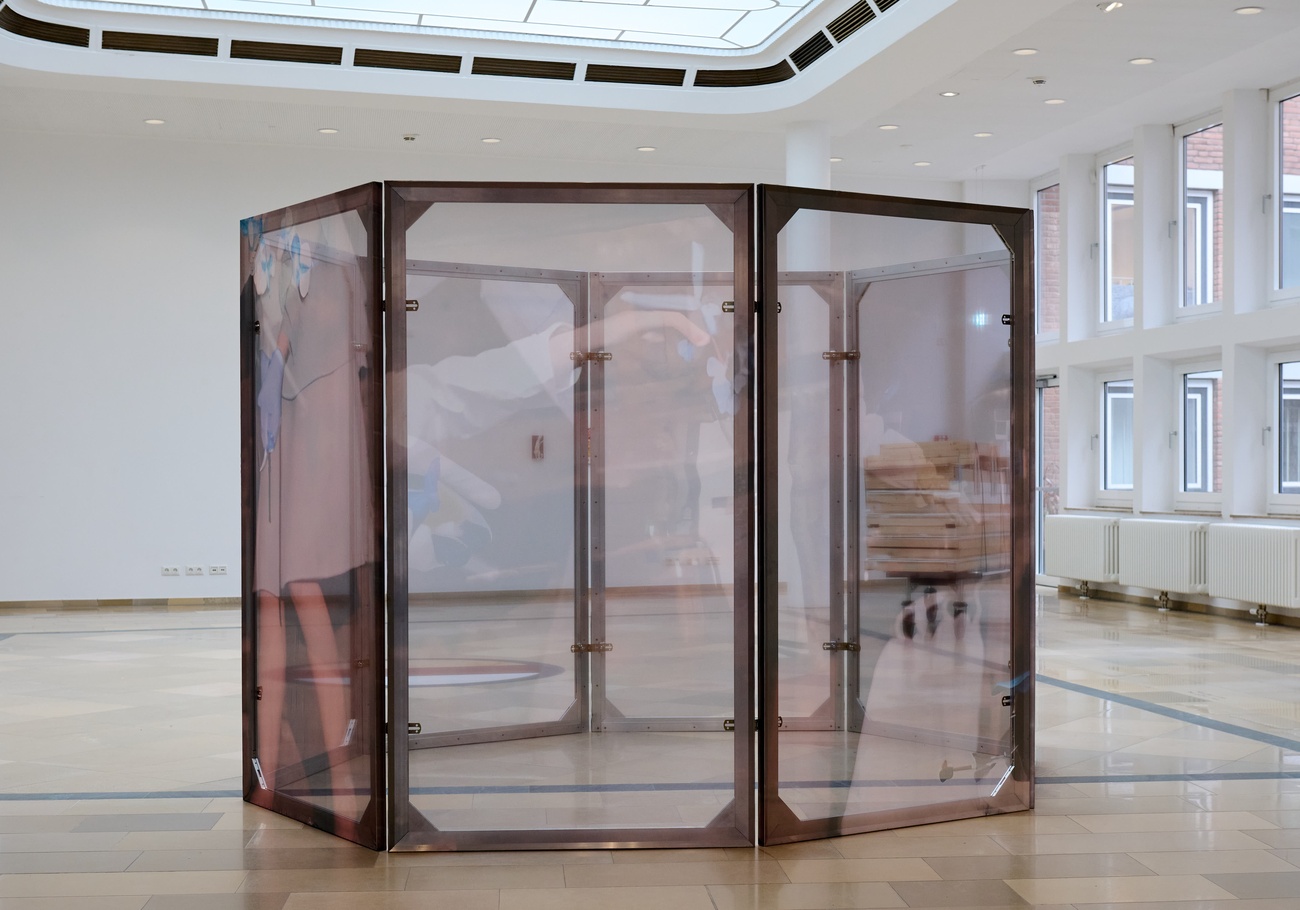
Dorota Gawęda and Eglė Kulbokaitė transform the inside of Stadthausgalerie with their two works, Enclosure (Lower bound of a landscape) (2023) (4) and Yield II (2021), into a semi-transparent architecture of boundaries and reflections. Yield draws on the childlike form of a vanity mirror popular in former Eastern Bloc countries, where stylized yellow plastic petals frame a circular mirror surface. Appearing as a polished object made out of aluminium the sculpture also recalls a surveillance camera, its gaze shifting with the movement of the visitors –perhaps only to confront them with their own reflection. With Enclosure, an installation composed of several digitally printed chiffon panels, the two artists refer to the historical enclosure and privatization of land. The faintly visible images on the panels show photographs from one of their performances based on the Slavic folklore of the Południca, a witch who appears during harvest time, paralyzing the works. The images gain and lose saturation depending on the viewer’s position. As translucent membranes of hybrid imagery, they take shape in space and foreground the relationality of bodies within it.
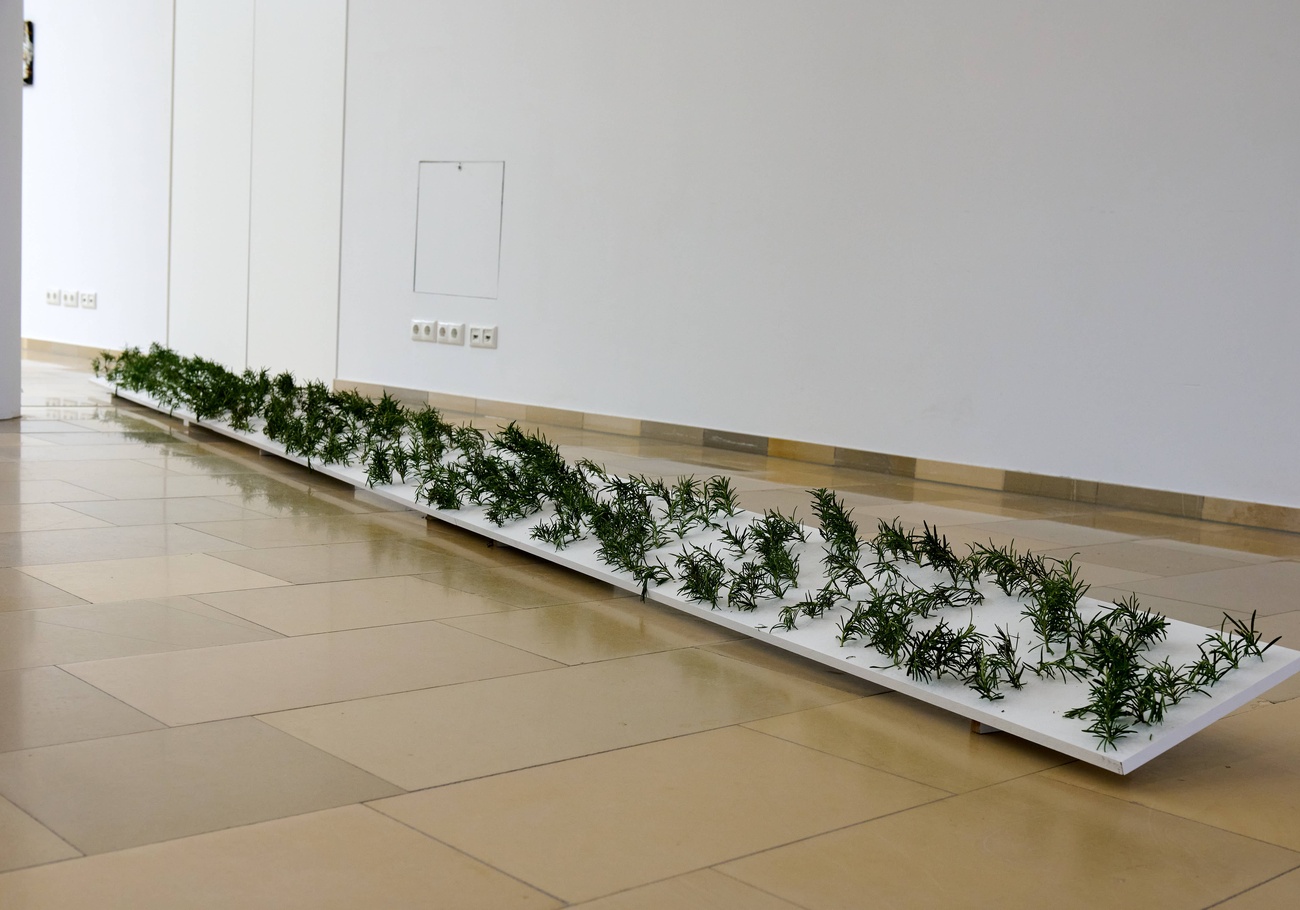
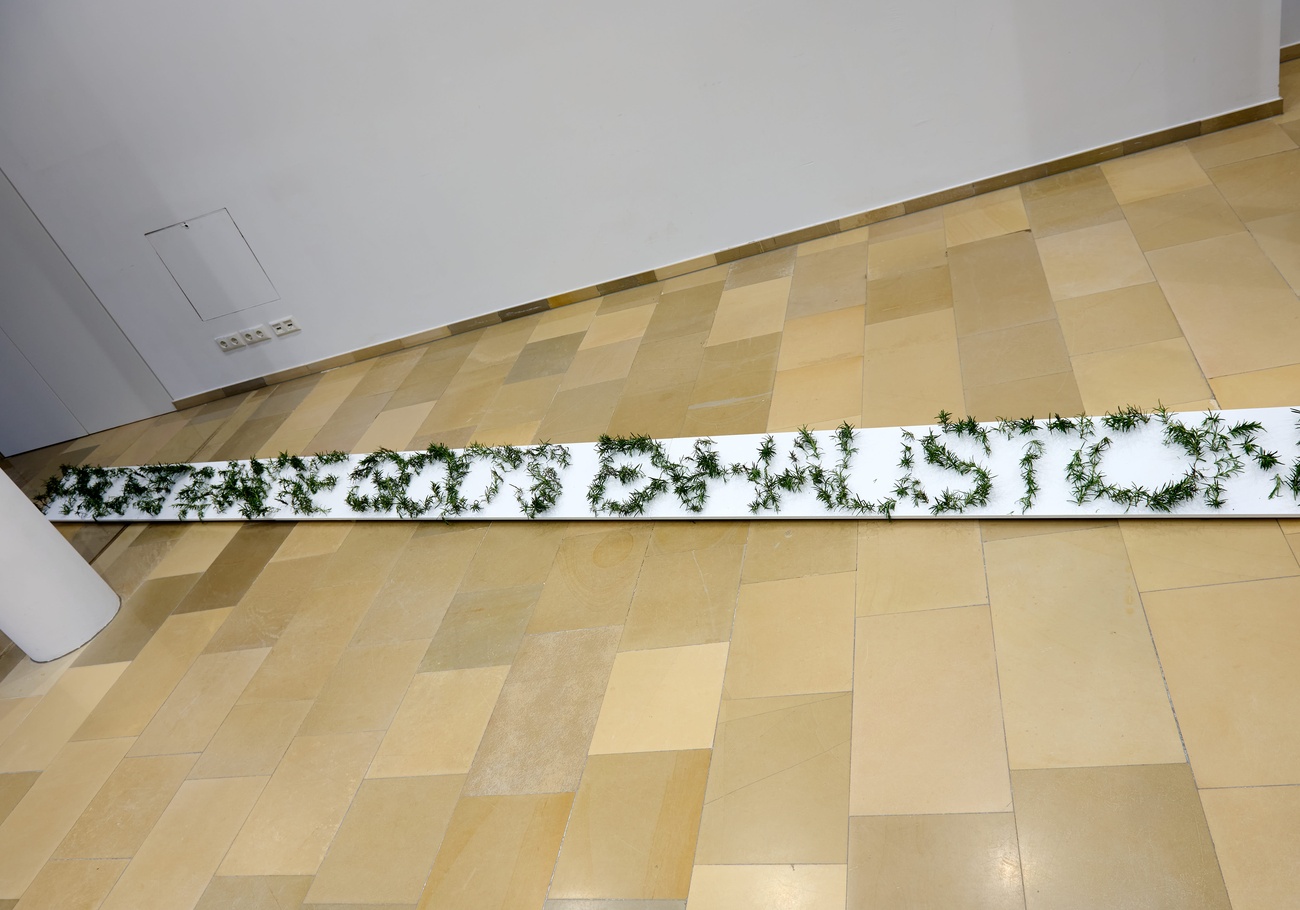
Alexandra Sheherazade Salem contributes with a poetic work that mobilizes language and scent, inscribing itself into the space and gradually spreading throughout it, revealing the idea of fixed boundaries and autonomous bodies as fiction. Drawing on practices of spiritual cleansing and fumigation, the work is a sensorial meditation, asking how we can conceptualize growth other than progress. By introducing rosemary branches, Salem brings an organic material into the space that dries out and decays over the course of the exhibition. In doing so, the work withdraws from the logics of conservation, circulation, and value production, focusing instead on processes of ephemerality, exhaustion, and change.
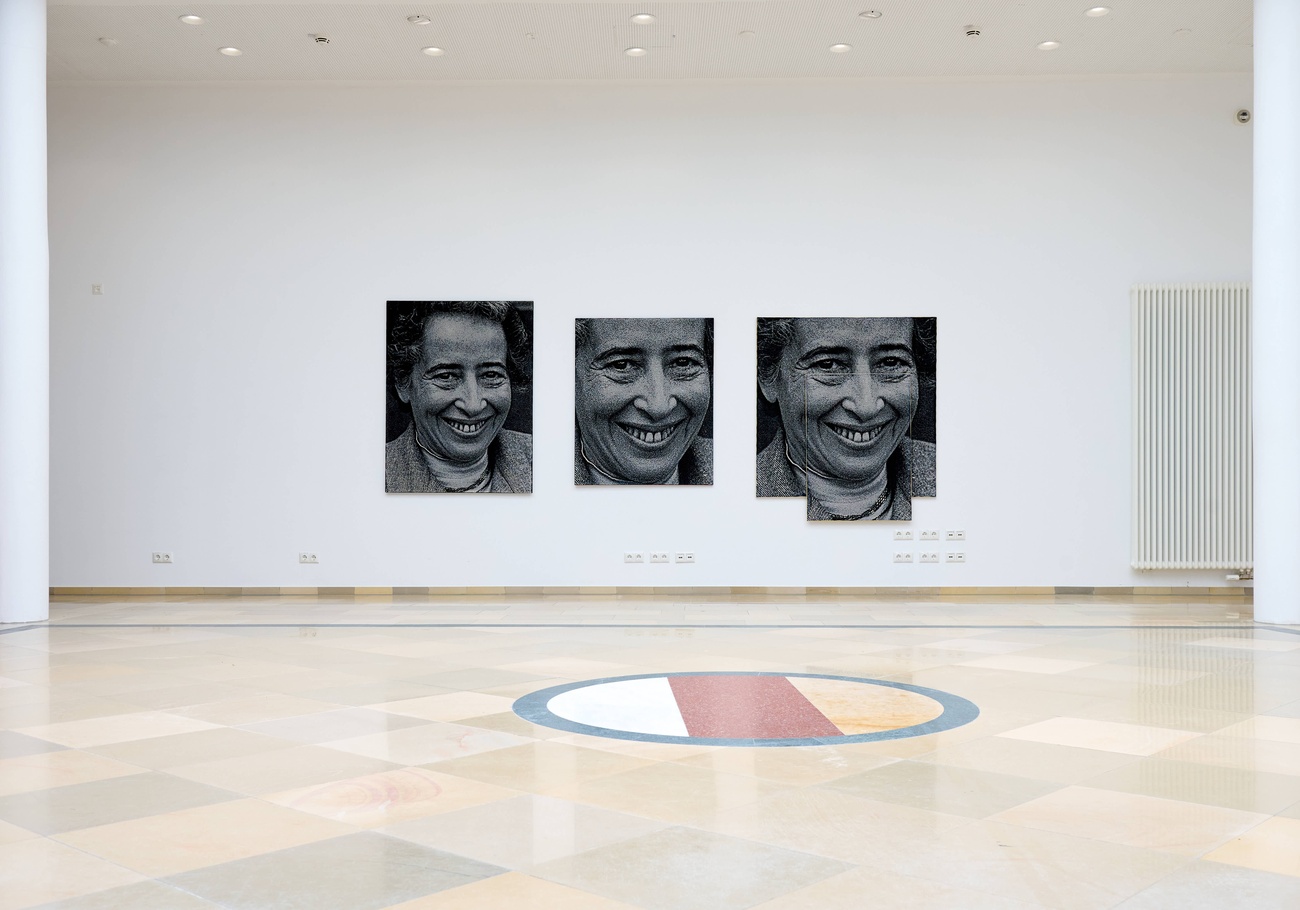
In dialogue with the space and its function as an election office, Sinaida Michalskaja’s large-scale work HANNAH (Deutsche Wärme) (2025) recalls the necessity of civic engagement. The work consists of four stretched, Jacquard-woven tapestries, each depicting a different crop of political theorist Hannah Arendt (1906–1975). They are based on a black-and-white photography of Arendt’s smiling face taken by Barbara Niggl Radloff at the first Kulturkritikerkongress in Munich in 1958. The outer edges of the tapestries are framed in the colors of the German flag, creating a connection to the heraldic colors of the city of Münster embedded in the floor of the Stadthausgalerie. Engaging with Arendt’s political thinking, the work recalls the need to resist authoritarian tendencies and to defend the public space and its plurality. With the video work SOPHIE (2021) Michalskaja turns to another public figure, the transfeminist electropop musician SOPHI_E (1986–2021). Drawing on the track _Forever, the work translates the lyrics into a quiet, visual rhythm and brings the struggle for bodily self-determination into focus.
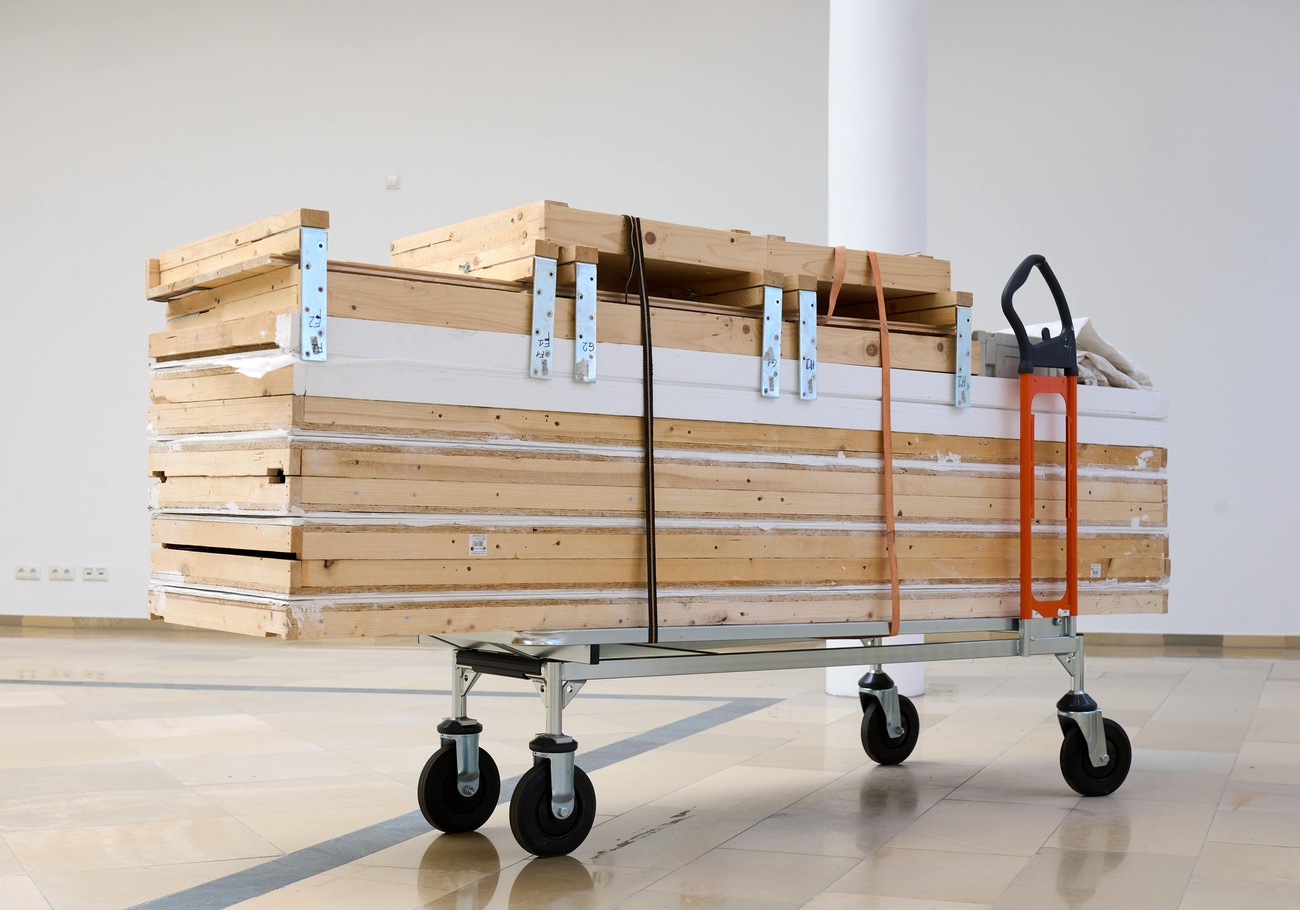
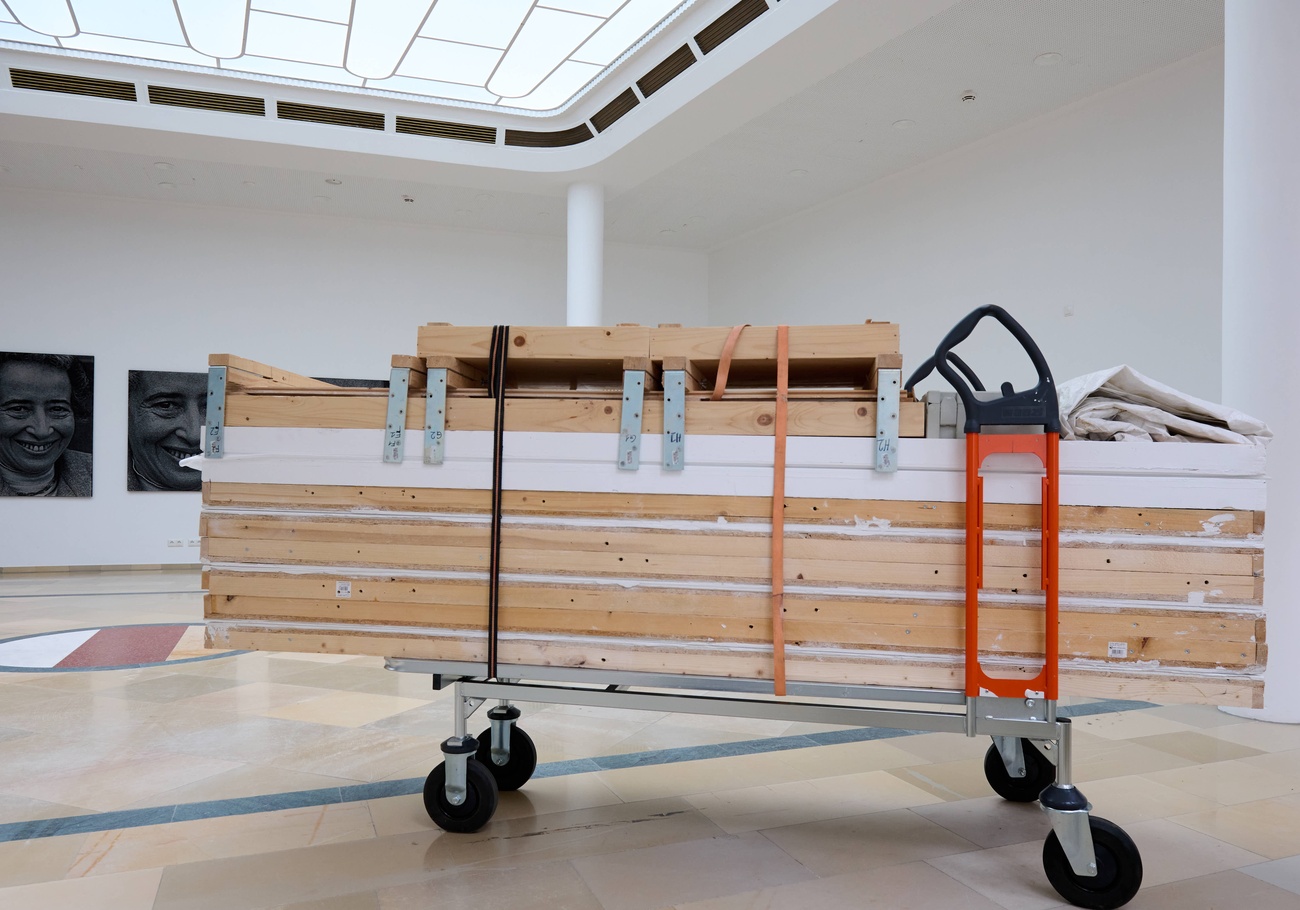
With four performative works, the exhibition opens the space for narratives of moving bodies and temporary gatherings. In her choreographic practice, Ewa Dziarnowska invites audiences to move away from fixed meanings and clear narratives. Instead, she proposes an intuitive way of seeing and making one that values sensation and attention over interpretation (29/4/2026, 6 pm). Together with the dancers kiana rezvani and Sunayana Shetty, she aims to create “moments” that resist the linear pull of chronology, in favor of understanding time as Kairos: the charged instant when everything briefly aligns, a field of possibility. Chloe Chignell’s durational performance SUN CUT: a lover’s dictionary animates the 366 entries of Lesbian Peoples: Materials for a Dictionary (1979) by Monique Wittig and Sandie Zeig (15/3/2026, 3 pm). Word by word, concept by concept, language appears as something material that happens between bodies – open to change, repetition and speculation. Building on Wittig and Zeig’s critique of linguistic authority, SUN CUT approaches the dictionary not only as a text but as a practice for reshaping relations, movement and collective presence. In her solo performance, SSASSIN’S CREED (LADY SAYS STOP), Liina Magnea delves with humor and associative speech into the abysses of human behavior (10/5/2026, 3 pm). In the role of a police officer, she embodies institutional authority while focusing on moments in which seemingly unquestioned power and social status begin to falter. Moving between fantasies of victimhood and delusions of grandeur, the work portrays a figure whose belief in order and security has begun to fracture, while probing questions of violence and political radicalization. With the work dérivedérive, Abdoul Karim Martens and Dominik Sartor take hell is other people (if you’re lucky) beyond the exhibition space and assert the right to the city (14/3 + 30/4/2026, 10 am – 6 pm). The intervention takes place for one day each at Münster’s harbour area and at the agricultural plots of Hoppengarten. On a freestanding, mobile white wall, the artists present their works, shifting familiar axes of vision, routes, and uses of public space. Referring to the cultural technique of the derive formulated by Guy Debord (1931–1994) – a drifting through a place – the work resists any logic of utility and instead understands the city as a constellation of atmospheres, affects, and encounters. In Münster the work appears for the first time within an institutional framework, turning the white cube inside out: while the exhibition space functions as a storage site – 14.03.26/30.04.26 (14) is an installation consisting of a wall, paint, and packaging supplies, that rest on a wagon – the outside is activated for a temporary and mobile showing of art. Departing from the Stadthausgalerie in the morning, the artists roll the wagon through the city and assemble the wall in situ to show their works, when, in the evening, they deinstall the installation and bring it back to Stadthausgalerie.
A joint projekt with:


The exhibition is supported by:

Perfomance by Ewa Dziarnowska (work in progress)
, Stadthausgalerie Münster (hosted by Kunsthalle Münster)
Abdoul Karim Martens + Dominik Sartor: dérivedérive
, Stadthausgalerie Münster (hosted by Kunsthalle Münster)
Liina Magnea: SSASSINS CREED (LADY SAYS STOP)
, Stadthausgalerie Münster (hosted by Kunsthalle Münster)
Abdoul Karim Martens + Dominik Sartor: dérivedérive
, Stadthausgalerie Münster (hosted by Kunsthalle Münster)
Chloe Chignell: SUNCUT: a lover's dictionary
, Stadthausgalerie Münster (hosted by Kunsthalle Münster)